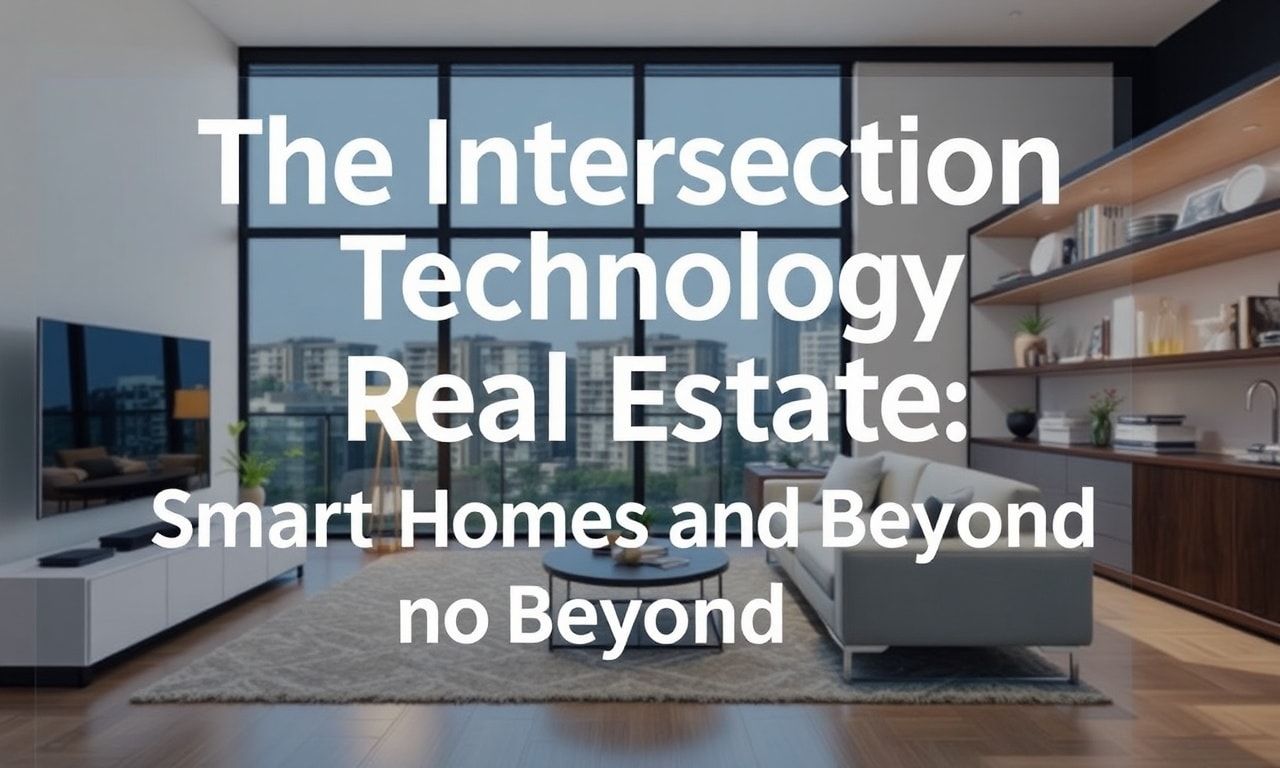
The Evolution of Smart Homes
The real estate industry is undergoing a significant transformation, driven by technological advancements. Smart homes, once a futuristic concept, are now a reality, offering homeowners unprecedented levels of convenience, security, and energy efficiency. These homes are equipped with a variety of smart devices that can be controlled remotely via smartphones or voice assistants, making daily tasks more manageable and enhancing the overall living experience.
From smart thermostats that learn your preferences and adjust the temperature accordingly to smart lighting systems that can be programmed to create the perfect ambiance, the possibilities are endless. Additionally, smart security systems, including cameras and doorbell cameras, provide an extra layer of protection, allowing homeowners to monitor their property in real-time. This integration of technology into real estate is not only improving the quality of life for residents but also adding value to properties.
The Role of AI in Real Estate
Artificial Intelligence (AI) is another technological innovation that is revolutionizing the real estate sector. AI-powered algorithms can analyze vast amounts of data to predict market trends, identify investment opportunities, and even assess the potential value of properties. This data-driven approach enables real estate professionals to make more informed decisions and provide better services to their clients.
Moreover, AI chatbots and virtual assistants are being used to enhance customer service. These tools can answer queries, schedule viewings, and provide personalized recommendations, making the buying and selling process more efficient. AI is also being used to create virtual tours of properties, allowing potential buyers to explore homes from the comfort of their own homes.
The Impact of IoT on Real Estate
The Internet of Things (IoT) is playing a crucial role in the development of smart homes. IoT devices, such as smart appliances, sensors, and actuators, are interconnected to create a seamless and automated living environment. These devices can communicate with each other and with the homeowner, enabling them to control various aspects of their home remotely.
For instance, smart kitchen appliances can be programmed to start cooking at a specific time, while smart washing machines can be controlled via a smartphone app. IoT devices can also monitor energy usage and suggest ways to reduce consumption, helping homeowners save on utility bills. The integration of IoT technology into real estate is not only enhancing the living experience but also contributing to sustainability efforts.
Cybersecurity in Smart Homes
As smart homes become more prevalent, the need for robust cybersecurity measures is more important than ever. Smart devices are connected to the internet, making them vulnerable to cyber threats. To protect their homes and personal data, homeowners must ensure that their smart devices are secure.
This can be achieved by using strong, unique passwords, keeping software up to date, and using a secure Wi-Fi network. Additionally, homeowners should be aware of the Liverpool property market news and other local news sources to stay informed about any potential cybersecurity threats in their area. By taking these precautions, homeowners can enjoy the benefits of smart home technology without compromising their security.
The Future of Technology in Real Estate
The future of technology in real estate looks promising, with several innovations on the horizon. For example, augmented reality (AR) and virtual reality (VR) technologies are being used to create immersive virtual tours of properties, allowing potential buyers to explore homes in a virtual environment. This technology can help buyers make more informed decisions and reduce the need for physical viewings.
Furthermore, blockchain technology is being explored for its potential to streamline real estate transactions. Blockchain can provide a secure and transparent way to record property ownership and transfer, reducing the need for intermediaries and speeding up the transaction process. As these technologies continue to evolve, they will likely have a significant impact on the real estate industry.
In conclusion, the intersection of technology and real estate is transforming the way we live and interact with our homes. From smart homes and AI to IoT and cybersecurity, these innovations are enhancing the living experience, improving efficiency, and adding value to properties. As technology continues to advance, we can expect even more exciting developments in the real estate sector.
For more insights on this topic, you might find De Kunst van Reizen: Een Gids particularly informative.
To gain a deeper understanding of the advancements shaping our digital world, delve into AI’s transformative journey, a must-read for tech enthusiasts and professionals alike.
Discover how two global cities are shaping the future of tech in Munich and Liverpool’s tech scene, a fascinating comparison of innovation hubs.